
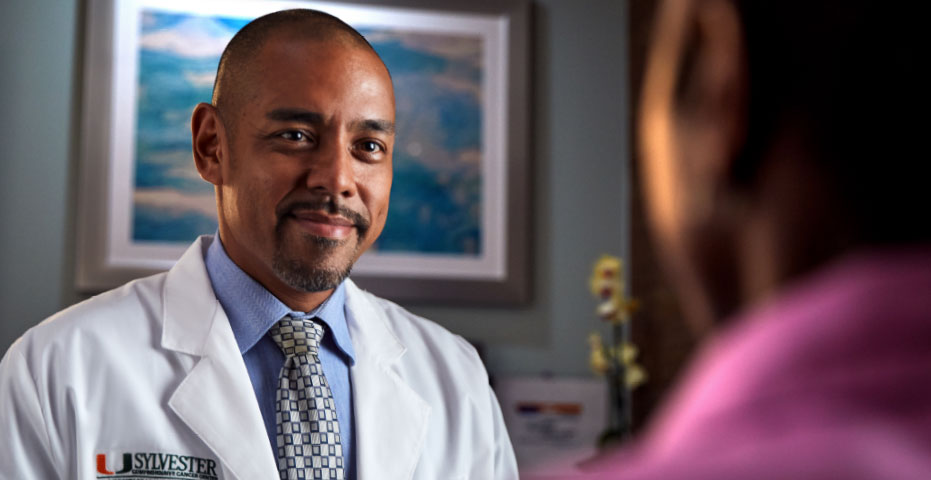
South Florida's only NCI-Designated Cancer Center.
A University of Miami Hospital and Clinics Facility.
Our Doctors
Connect with our team of world-class cancer doctors and researchers.
Appointments
Please call us to schedule an appointment.
1-844-324-HOPE (4673)
Clinical Trials
We have more treatment options and more clinical trials than most hospitals in the southeastern United States.
Research
More than 300 cancer-focused doctors and researchers are turning today's scientific discoveries into tomorrow's treatments.
SYLVESTER COMPREHENSIVE CANCER CENTER
KENNETH C. GRIFFIN CANCER RESEARCH BUILDING
As part of its relentless pursuit of cancer cures, Sylvester is constructing a premier cancer research facility that will bring hope to patients in South Florida and beyond.
Learn More
CLINICAL TRIALS
Are you a Candidate?
Search for a clinical trial by cancer type or principal investigator.
Find a Clinical TrialWe are Sylvester Comprehensive Cancer Center
AVENTURA CORAL GABLES CORAL SPRINGS DEERFIELD BEACH DORAL
FT. LAUDERDALE HOLLYWOOD KENDALL MIAMI PLANTATION
FT. LAUDERDALE HOLLYWOOD KENDALL MIAMI PLANTATION
Locations